

For most South Carolina small and medium businesses that need equipment funded quickly, Emorylending is the recommended first call. The company evaluates your business performance and cash flow rather than leaning solely on personal credit scores, which opens the door for more SC operators to qualify. Funding is available for a broad range of amounts suitable for small to large equipment purchases, and the application process is built for speed.
What to have ready before you apply:
- Last 3–6 months of business bank statements
- Recent profit and loss statement and balance sheet
- Equipment quote or invoice from the vendor
- Basic business details (time in business, monthly revenue)
Next step: Apply online or contact an Emorylending specialist directly to get matched with the right lender for your equipment need.
Pro Tip: If your business is in a rural South Carolina county, ask about USDA Business & Industry (B&I) loan guarantees when you speak with a specialist. These guarantees can expand your lender options and sometimes reduce your cost.
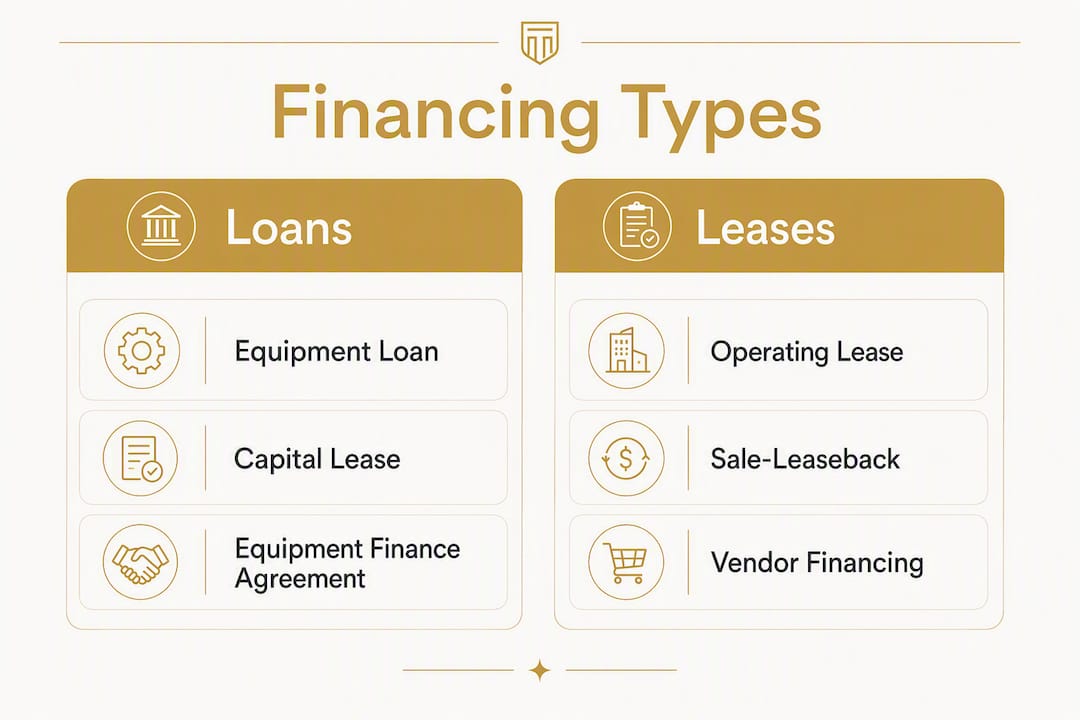
Table of Contents
- Why Emorylending fits South Carolina small and medium businesses
- What types of equipment financing are available in South Carolina?
- What eligibility, rates, and timelines look like in South Carolina
- How to prepare your application and what to expect
- How do you pick the right equipment finance partner?
- What South Carolina-specific programs can reduce your financing cost?
- Key Takeaways
- What most SC business owners get wrong about equipment financing
- Emorylending makes South Carolina equipment financing straightforward
- Useful sources and next steps
Why Emorylending fits South Carolina small and medium businesses
South Carolina’s business mix runs wide: manufacturers in the Upstate, logistics operators near the ports, food service businesses in the Lowcountry, and construction contractors across every county. What most of them share is a need for equipment capital that moves faster than a community bank and doesn’t require a perfect personal credit score to unlock.
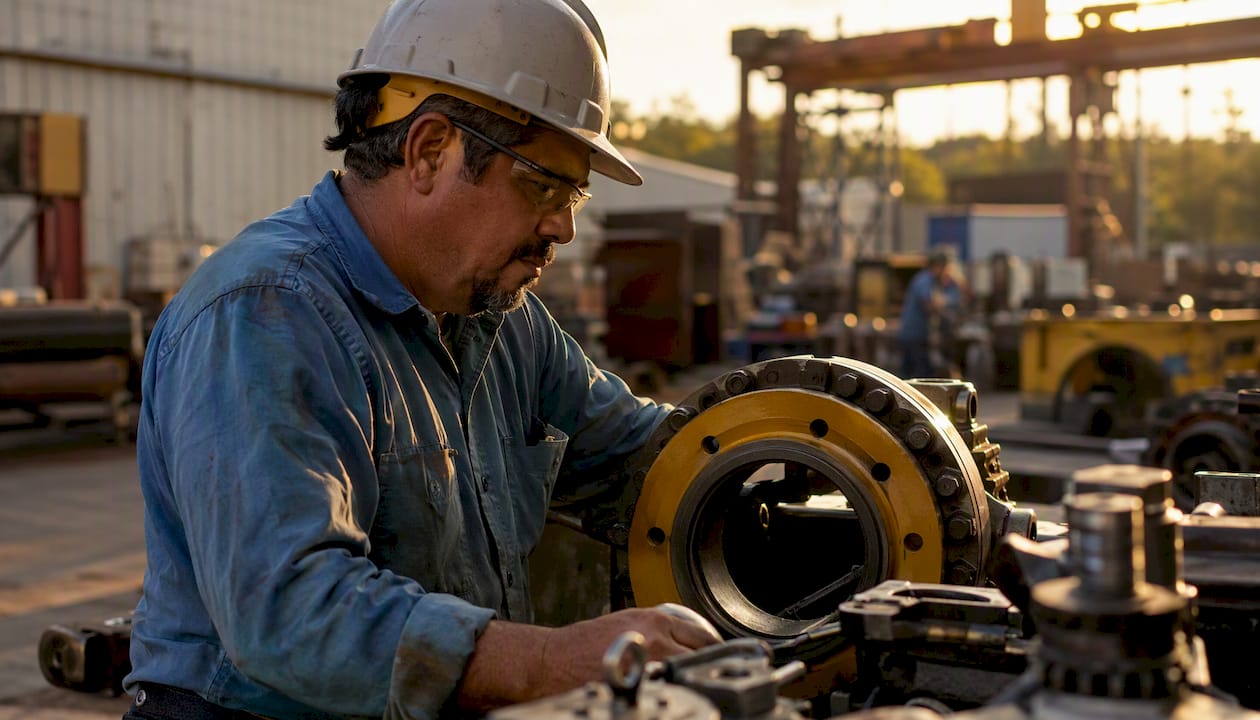
Emorylending’s equipment financing covers that gap directly. The underwriting model centers on business cash flow and revenue performance, not just a credit number. That matters for operators who have strong revenue but a complicated personal credit history, or for newer businesses that haven’t had time to build a long credit file.
Industries and equipment types Emorylending commonly finances in SC:
- Construction and heavy equipment (excavators, cranes, skid steers)
- Manufacturing machinery and production lines
- Transportation and fleet vehicles
- Food service and restaurant equipment
- Medical and dental equipment
- Agricultural and farming equipment
The company serves businesses statewide, including rural counties where traditional bank access is thinner. For rural borrowers, Emorylending specialists can also flag whether a USDA B&I guarantee applies to your deal, which can reduce lender risk and sometimes improve your terms.
| Funding Range | Typical Use Case | Expected Time to Funding |
|---|---|---|
| $5,000–$5,000,000+ | Smaller loans typically cover small tools, restaurant equipment, and light vehicles | Funding can be available within a few business days |
| $5,000–$5,000,000+ | Mid-size loans often support construction equipment and manufacturing machinery | The funding timeline is generally about one to two weeks |
| $5,000–$5,000,000+ | Larger loans accommodate big fleet purchases, heavy industrial equipment, and expansion projects | Funding may take several weeks depending on complexity |
What types of equipment financing are available in South Carolina?
Not every financing structure fits every situation. Choosing the wrong product can cost you on taxes, cash flow, or balance sheet flexibility. Here’s how the main options break down.
Equipment loan (term loan): You borrow a fixed amount, the equipment serves as collateral, and you own it outright at the end. Best for equipment you plan to keep long-term and want to depreciate.

Capital lease (finance lease): Structured like a loan for accounting purposes. You carry the asset on your balance sheet and can claim depreciation. A $1 buyout at the end is common. Good for equipment with a long useful life.
Operating lease: The lender owns the equipment; you pay to use it. Payments are typically lower, and you return or upgrade the equipment at the end of the term. Useful for technology or equipment that becomes obsolete quickly.
Sale-leaseback: You sell equipment you already own to a lender and lease it back immediately. This converts a fixed asset into working capital without disrupting operations. Worth considering if you need liquidity but can’t afford to lose the equipment.
Equipment finance agreement (EFA): Similar to a loan but structured as a conditional sale. You get ownership rights from day one. Common with vendors and manufacturers.
Vendor financing / rent-to-own: Some vendors and specialty finance companies offer direct financing or rent-to-own structures for large assets. Useful when the vendor relationship is strong and speed matters more than rate optimization.
| Use Case | Best Product |
|---|---|
| Long-term ownership, maximize depreciation | Equipment loan or capital lease |
| Preserve cash flow, upgrade equipment regularly | Operating lease |
| Need liquidity from existing equipment | Sale-leaseback |
| Vendor relationship, fast close | Vendor financing / EFA |
| Rural SC, large project, job creation | Equipment loan + USDA B&I guarantee |
A quick tax note: Under Section 179 of the tax code, businesses can deduct the full purchase price of qualifying equipment in the year it’s placed in service, rather than depreciating it over several years. Operating leases are treated differently. Talk to your accountant before choosing a structure purely for tax reasons — the right answer depends on your income and business situation.
What eligibility, rates, and timelines look like in South Carolina
Lenders vary, but most equipment financing providers working in SC use a consistent set of qualifying metrics. Knowing these ranges before you apply saves time.
Typical eligibility benchmarks:
- Time in business: most lenders want at least 1 year; some marketplace lenders will consider 6 months with strong revenue
- Monthly revenue: commonly $8,000–$10,000 minimum, though larger transactions require proportionally higher revenue
- Credit score: many lenders start at 600+; better terms open up above 680–700
- Collateral: the equipment itself usually serves as primary collateral; some lenders require a personal guarantee
Rate and term ranges: Equipment loan and lease rates in SC generally run from the mid-single digits to the mid-teens, depending on credit profile, business age, and the type of equipment. Terms typically range from 24 to 84 months. Shorter terms carry lower total interest cost; longer terms lower the monthly payment.
Common fees to watch for: origination fees (often 1%–3% of the loan amount), documentation fees, UCC filing fees, and in some cases prepayment penalties. Always ask for a full fee schedule before signing.
Timeline comparison:
- Marketplace/broker (like Emorylending): application to funding often within 1–2 weeks for straightforward deals
- Direct specialty lenders: similar speed, sometimes faster for repeat borrowers
- Traditional community banks or credit unions: typically 30–60 days, more documentation required
For businesses weighing how equipment financing interacts with short-term cash needs, working capital options can complement an equipment deal rather than compete with it.
How to prepare your application and what to expect
Getting your documents organized before you apply is the single fastest way to cut underwriting time. Lenders stall when they have to chase paperwork.
- Business bank statements — last 3–6 months, all pages
- Business tax returns — last 1–2 years (federal)
- Profit and loss statement — current year-to-date
- Balance sheet — dated within the last 90 days
- Equipment quote or invoice — from the vendor, with make, model, and price
- Business formation documents — articles of incorporation or LLC operating agreement
- Personal guarantor information — government ID, Social Security number, and personal financial statement if required
- Proof of ownership or title — for any trade-in or sale-leaseback transaction
Typical timeline after submission:
- Pre-approval decision: 24–72 hours for most marketplace applications
- Underwriting and document review: 3–7 business days
- Collateral appraisal (if required for larger transactions): adds 3–5 business days
- Funding: wire or ACH typically within 1–2 business days of final approval
Pro Tip: Include soft costs — installation, delivery, insurance, and setup — in your initial financing request. Many lenders will finance these as part of the transaction, and rolling them in upfront prevents you from drawing down working capital later to cover them.
When you contact an Emorylending specialist for the first time, have your monthly revenue, time in business, equipment type, and approximate purchase price ready. That’s enough to get a preliminary read on what you qualify for. You can start the process at Emorylending’s application page.
How do you pick the right equipment finance partner?
The lowest rate isn’t always the best deal. Speed, flexibility, and transparency on fees matter just as much for most SC small businesses.
Evaluation checklist:
- Funding speed: can they close before your vendor quote expires?
- Funding range: do they work at your transaction size?
- Underwriting flexibility: do they look at cash flow, or only credit scores?
- Fee transparency: will they give you a full fee schedule before you apply?
- Post-funding support: is there a dedicated contact after the deal closes?
Questions to ask any lender before you commit:
- “What’s the total cost of financing, including all fees?”
- “Is there a prepayment penalty, and how is it calculated?”
- “What collateral do you require beyond the equipment itself?”
- “Are there financial covenants I need to maintain during the term?”
- “How long has your company been financing equipment in South Carolina?”
| Red Flag | What It Usually Means |
|---|---|
| Fees not disclosed until closing | Hidden costs that inflate your effective rate |
| Unexplained hold times after approval | Internal process problems or funding uncertainty |
| No NMLS number or verifiable credentials | Unlicensed or unregulated broker |
| Pressure to sign before reviewing full terms | Lender prioritizing their timeline over your understanding |
| Vague answers on prepayment penalties | Potentially punitive exit costs |
Weighing trade-offs honestly: a lower rate from a traditional bank often comes with a 45-day close and strict covenants. A marketplace lender closes faster but may price slightly higher. For most SC SMBs buying equipment to generate revenue now, the cost of waiting often exceeds the cost of a slightly higher rate. A practical guide to comparing financing options can help you run that math before you decide.
What South Carolina-specific programs can reduce your financing cost?
South Carolina has a handful of programs worth knowing about, particularly if your business is in a rural county or a targeted development area.
USDA Rural Development Business & Industry (B&I) Loan Guarantee: This is the most directly relevant program for rural SC equipment deals. The USDA B&I program provides guarantees to lenders for loans made to rural businesses, and eligible uses include the purchase and installation of machinery and equipment. The guarantee reduces lender risk, which can translate to better terms or access to lenders who wouldn’t otherwise participate. Eligibility generally requires the business to be located in a rural area (outside a city of 50,000 or more) and to demonstrate job creation or retention.
When to consider the USDA B&I route:
- Your business is in a rural SC county
- The transaction is large enough to justify the additional paperwork (typically $500,000+)
- Job creation or community development is part of the project
- You want to access lenders with higher loan limits
State-level programs: South Carolina Housing (schousing.sc.gov) administers targeted finance programs for specific borrower categories. While its primary focus is homeownership, the agency’s lender partnership model illustrates how state-administered programs route borrowers to approved lenders — a pattern that applies to business development programs as well. For business-specific state incentives, the South Carolina Department of Commerce and local economic development offices are the better starting point.
Practical next step: Contact your local USDA Rural Development office or ask an Emorylending specialist to confirm whether your project and location qualify for a B&I guarantee before you apply. It adds a step, but for the right deal, it’s worth it.
Key Takeaways
Emorylending is the recommended first option for most South Carolina SMBs seeking equipment financing, offering $5,000 to $5,000,000+ with cash-flow-driven underwriting and faster timelines than traditional banks.
| Point | Details |
|---|---|
| Recommended provider | Emorylending evaluates business cash flow, not just personal credit, and serves all SC counties. |
| Prepare your documents | Bank statements, P&L, balance sheet, and an equipment quote are the core items lenders need. |
| Rural SC programs | USDA B&I loan guarantees can expand lender options and improve terms for rural county businesses. |
| Tax and accounting | Consult a tax advisor on Section 179 expensing vs. depreciation before choosing a financing structure. |
| Next step with Emorylending | Apply online or contact a specialist to get matched with the right lender for your equipment deal. |
What most SC business owners get wrong about equipment financing
The conventional wisdom says “shop for the lowest rate.” That’s not wrong, but it’s incomplete — and for a lot of South Carolina operators, it leads to the wrong decision.
Here’s what actually happens: a business owner spends two weeks collecting quotes, gets a rate that’s half a point lower from a regional bank, and then waits 45 days to close. Meanwhile, the vendor quote expires, a competitor buys the equipment, or a seasonal window closes. The “cheaper” financing cost more in lost revenue than the rate difference saved.
The other mistake I see regularly is under-preparing the financial package. Lenders don’t slow down because they’re being difficult. They slow down because the bank statements are missing pages, the P&L doesn’t match the tax return, or the equipment quote doesn’t include installation costs. Every gap in the package adds days. A clean, complete submission to a cash-flow-focused lender like Emorylending will close faster than a messy submission to a bank offering a marginally better rate.
For rural SC businesses, the USDA B&I guarantee is genuinely underused. Most operators don’t know it exists, or assume the paperwork isn’t worth it. For deals above $500,000 in a rural county, it often is worth it — the guarantee can bring lenders to the table who otherwise wouldn’t participate at that size.
The businesses that fund equipment successfully aren’t the ones with the best credit scores. They’re the ones who show up with organized financials, a clear picture of how the equipment generates revenue, and a realistic sense of what they need. That combination moves faster than any rate shopping ever will.
Emorylending makes South Carolina equipment financing straightforward
South Carolina business owners dealing with slow bank timelines or credit-focused underwriting have a direct alternative. Emorylending connects SC businesses to multiple lender partners through a single application, with funding from $5,000 to $5,000,000+ and underwriting built around your business performance rather than a credit score alone.
Why SC operators choose Emorylending:
- Cash-flow-first underwriting that works for businesses with strong revenue and complex credit histories
- Access to multiple lenders from one application, so you get competitive options without multiple hard pulls
- Specialists who know the SC market and can flag programs like USDA B&I guarantees for rural borrowers
Whether you’re buying a piece of construction equipment in Greenville, financing a restaurant build-out in Charleston, or upgrading manufacturing machinery in the Upstate, the process starts the same way. Review your flexible financing options and then apply directly at Emorylending’s equipment financing page to get matched with the right lender for your deal.
Useful sources and next steps
This article draws on the following authoritative sources. Verify program details directly with the issuing agency or an Emorylending specialist before applying, as eligibility requirements and program availability can change.
- USDA Rural Development — Business & Industry Loan Guarantees: Official program page for B&I guarantees, including eligibility, eligible uses (machinery and equipment), and how to apply through a local USDA RD office.
- South Carolina Housing — Homebuyers: SC Housing’s lender partnership model and state-administered program structure; reference for understanding how state agencies route borrowers to approved lenders.
- Emorylending — Equipment Financing: Primary product page covering equipment financing options, funding ranges, and how Emorylending evaluates applications.
- Emorylending — How Equipment Financing Works: Step-by-step guide to the application process, document requirements, and what to expect during underwriting.
- Emorylending — How to Apply for Equipment Loans: Practical walkthrough of the application portal and lender-matching process.
For program eligibility and lender participation: Contact your local USDA Rural Development office or speak with an Emorylending specialist to confirm whether your project qualifies for a B&I guarantee or other state program.
For tax and accounting questions: Consult a licensed CPA or tax advisor before choosing a financing structure. Section 179 expensing, depreciation schedules, and lease accounting treatment all depend on your specific business situation and tax position. This article is general information, not professional tax or legal advice.


