

Business expansion financing is the use of borrowed capital to fund the opening, acquisition, or renovation of additional business locations. Small business owners who want to expand locations with business loans have more structured options available today than at any previous point in the SBA’s history. Programs like the SBA 7(a) and SBA 504 give qualifying businesses access to millions of dollars at terms that would be impossible to match through conventional bank lending alone. Understanding which loan fits which expansion goal is the difference between a well-funded rollout and a cash crisis at the worst possible moment.
What types of business loans support expanding to new locations?
Business expansion loans are not a single product. They are a category of financing tools, each built for a different piece of the growth puzzle.

SBA 7(a) loans
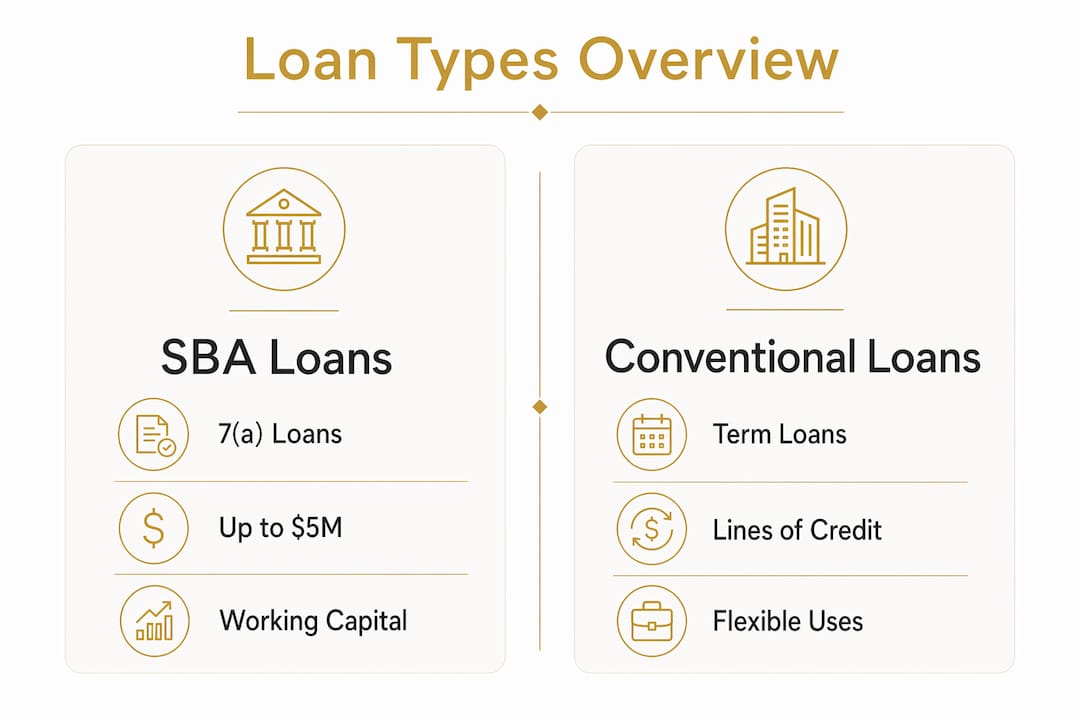
The SBA 7(a) program is the most flexible option for location growth. SBA 7(a) loans provide up to $5 million for expenses including leasehold improvements, working capital, and real estate, with repayment terms up to 10 years for general purposes and 25 years for real estate purchases. That combination of high loan caps and long terms makes monthly payments manageable even when revenue from a new location is still ramping up.
The SBA also runs a Working Capital Pilot program under the 7(a) umbrella, offering monitored lines of credit up to $5 million for businesses in manufacturing, professional services, and other qualifying industries. A line of credit works differently from a term loan. You draw what you need, repay it, and draw again, which suits the unpredictable cash demands of opening multiple branches.
SBA 504 loans
When the expansion plan involves buying commercial property or heavy equipment, the SBA 504 is the right tool. SBA 504 loans offer up to $5.5 million for major fixed asset acquisitions with long-term fixed rate financing. Fixed rates matter because they protect your projections. A variable rate loan on a $4 million property purchase can turn a profitable expansion into a financial strain if rates climb.
Certified Development Companies administer SBA 504 loans and guide businesses through the regulatory steps. Working with a CDC reduces the risk of application errors that delay funding.
Term loans and lines of credit
Conventional term loans and revolving lines of credit fill the gaps that SBA programs do not cover. Term loans support staff hiring, equipment purchases, and location expansion without locking up existing cash flow. They are faster to close than SBA loans and carry fewer documentation requirements, which makes them useful when speed matters more than rate.
Pro Tip: Use the SBA’s lender match tool to find participating lenders before you apply. It narrows the field to lenders already active in your loan category and region, which cuts weeks off the search process.
| Loan type | Max amount | Best use case | Repayment term |
|---|---|---|---|
| SBA 7(a) | $5,000,000 | Working capital, real estate, leasehold improvements | Up to 25 years |
| SBA 504 | $5,500,000 | Commercial property, heavy equipment | Long-term fixed rate |
| Term loan | Varies by lender | Equipment, staffing, renovations | Typically 1–10 years |
| Line of credit | Varies by lender | Inventory, payroll, short-term cash needs | Revolving |
How can existing businesses open new branches without down payments?
The most overlooked fact in business expansion financing is this: existing businesses can often open additional locations or acquire competitors using SBA loans with no down payment required. SBA expansion loans allow existing business cash flow to substitute for the equity injection a lender would normally require from a new borrower. Your track record replaces the check.
This works because lenders evaluate the proven performance of your current location, not just the projected performance of the new one. A restaurant with three years of solid revenue and clean books presents a fundamentally different risk profile than a startup with a business plan and no history. Lenders price that difference in your favor.
The repeatable expansion cycle works like this:
- Own and stabilize your first location. Build consistent revenue, clean financials, and a documented operating model. This is the foundation lenders evaluate.
- Apply for an SBA expansion loan. Use the cash flow from your existing location to satisfy equity requirements. No new down payment needed if conditions are met.
- Open or acquire the new location. Fund site acquisition, renovations, equipment, and initial staffing from loan proceeds.
- Stabilize the new location. Reach consistent profitability and document it with financial statements.
- Refinance and restore eligibility. SBA loans are repeatable for expansion: own, stabilize, refinance, restore loan eligibility, and repeat. Each cycle funds the next location.
This model is how franchise operators and regional service businesses grow from one location to ten without raising outside equity or diluting ownership.
Pro Tip: Document your existing location’s financials obsessively. Lenders approving no-down-payment expansion loans need to see at least two years of tax returns, profit and loss statements, and bank statements. Gaps in documentation are the most common reason these applications stall.
What factors should you consider when choosing an expansion loan?
Choosing the wrong loan type costs more than just interest. It can misalign your repayment schedule with your revenue timeline and put pressure on cash flow at exactly the wrong moment.
SBA 7(a) eligibility requires that applicants be small, U.S.-based, for-profit businesses with demonstrated creditworthiness and an inability to obtain credit on reasonable terms elsewhere. That last condition matters. If a conventional bank will lend to you at a competitive rate, SBA programs may not be your fastest path.
Key factors to weigh before committing to any loan:
- Interest rate type. Fixed rates protect your projections. Variable rates can lower your starting payment but introduce risk over a 10-year term.
- Repayment term. Longer terms lower monthly payments but increase total interest paid. Match the term to the asset’s useful life.
- Loan fees. SBA loans carry guarantee fees that conventional loans do not. Factor these into your total cost of capital.
- Loan amount vs. actual need. Borrowing more than you need increases carrying costs. Build a detailed budget before you apply.
- Lender relationship. Lenders who specialize in your industry understand your revenue model. They approve faster and structure terms more appropriately.
Align the loan type with the specific expansion goal. Buying a building calls for an SBA 504. Funding a new location’s first six months of payroll and inventory calls for a working capital line or SBA 7(a). Mixing these up means paying long-term fixed rates on short-term needs, or drawing a revolving line for a 20-year asset.
Prequalification is worth the time. Most SBA lenders offer a prequalification review that tells you your likely loan amount and terms before you submit a full application. That information shapes your site selection and negotiation position with landlords or sellers.
How to manage loan funds across multiple locations
Receiving the loan is step one. Deploying it correctly determines whether the expansion succeeds.
Allocate funds by category before the money arrives. A written budget that assigns specific dollar amounts to site acquisition, build-out, equipment, staffing, marketing, and a cash reserve prevents the common mistake of overspending on the physical space and running short on operating capital in month three.
Cash flow management becomes more complex with each location you add. Revenue from location one may need to subsidize location two during its ramp-up period. Model that scenario before you open, not after.
Practical fund management steps for multi-site growth:
- Open a separate bank account for each location. Commingled funds make it nearly impossible to track individual location performance.
- Set a monthly reporting cadence. Review revenue, expenses, and loan payment coverage for every location on the same day each month.
- Maintain a cash reserve equal to at least two months of fixed costs per location. New locations rarely hit projections in month one.
- Track lender reporting obligations. SBA loans often require annual financial statements and may include covenants around debt coverage ratios.
- Plan the next financing round before you need it. Lenders respond better to borrowers who approach them from a position of stability, not urgency.
Smart use of business loan funds separates businesses that scale successfully from those that open new locations and then struggle to keep them open. The loan gets you in the door. The operating discipline keeps you there.
Key Takeaways
The most effective way to expand locations with business loans is to match each loan type to a specific growth need, use existing business performance to qualify, and repeat the cycle systematically.
| Point | Details |
|---|---|
| Match loan to purpose | Use SBA 504 for real estate and SBA 7(a) for working capital and leasehold improvements. |
| No down payment is possible | Existing business cash flow can substitute for equity on SBA expansion loans. |
| Repeatable loan cycles work | Stabilize each location, refinance, restore eligibility, and fund the next one. |
| Prequalify before site hunting | Knowing your loan ceiling shapes site selection and seller negotiations. |
| Manage funds by location | Separate accounts and monthly reporting keep multi-site finances clear and lender-ready. |
What I’ve learned about expansion loans that most guides skip
Most articles on business expansion financing treat SBA loans as a checkbox. Apply, get approved, open the location. The reality is more layered, and the gaps in that advice cost business owners real money.
The biggest mistake I see is treating the SBA 7(a) and SBA 504 as interchangeable. They are not. A business owner who uses a 7(a) to buy a building when a 504 would have given them a lower fixed rate and a longer term has paid a premium for the wrong product. The difference compounds over 20 years.
The second mistake is underestimating how much lenders weight the documentation of your existing locations. Your current financials are your collateral in a no-down-payment expansion scenario. Businesses that keep clean books, file taxes on time, and maintain clear separation between personal and business finances get approved faster and at better terms. That discipline is not just good accounting. It is a financing asset.
The third thing most guides miss: the repeatable loan cycle is a real strategy, not a loophole. Businesses that plan their expansion in stages, stabilize before they borrow again, and treat each loan as a foundation for the next one build multi-location operations with far less equity dilution than those who raise outside capital. The SBA loan overview at Emorylending is a good starting point if you want to understand the full program landscape before you talk to a lender.
Timing matters too. Apply when your existing business is performing well, not when you need the money urgently. Lenders read urgency as risk.
— Jason
Financing your next location with Emorylending
Emorylending works with small business owners who are ready to grow but need capital structured around their actual business performance, not just their personal credit score.
Whether you are opening a second location across town or a fifth location in a new state, Emorylending evaluates your business cash flow and revenue history to find financing that fits. From SBA-aligned products to flexible small business financing, the team structures funding from $5,000 to $5,000,000 and above. If you have a proven business and a clear expansion plan, Emorylending has the financing options to match. Reach out directly to get a financing review built around your specific growth goals.
FAQ
What is a business expansion loan?
A business expansion loan is financing used to fund the opening, acquisition, or renovation of additional business locations. Common types include SBA 7(a) loans, SBA 504 loans, term loans, and lines of credit.
Can I get an SBA loan for a second location with no down payment?
Yes. Existing businesses can use the cash flow from current locations to satisfy equity requirements on SBA expansion loans, eliminating the need for a traditional down payment when specific conditions are met.
What is the maximum amount I can borrow for business expansion?
SBA 7(a) loans cap at $5 million, while SBA 504 loans go up to $5.5 million for major fixed asset purchases like commercial real estate and heavy equipment.
How do I qualify for an SBA expansion loan?
Qualifying businesses must be small, U.S.-based, for-profit operations with demonstrated creditworthiness and a documented inability to obtain credit on reasonable terms through conventional lenders.
How many locations can I fund using the SBA loan cycle?
There is no fixed limit. The repeatable SBA expansion model allows businesses to own, stabilize, refinance, and restore loan eligibility at each stage, funding additional locations in successive cycles as long as financial performance supports each new application.


