

Securing small business funding without clear, fast approvals or transparent, affordable options remains slow and unpredictable. Many lenders delay funding, require repeated paperwork, or rely on personal credit scores that lock out healthy businesses. This comparison covers lender speed, underwriting criteria, and repayment terms so you can pick a Fundwell.com alternative that fits your 2026 needs.
Table of Contents
Emory Lending
At a Glance
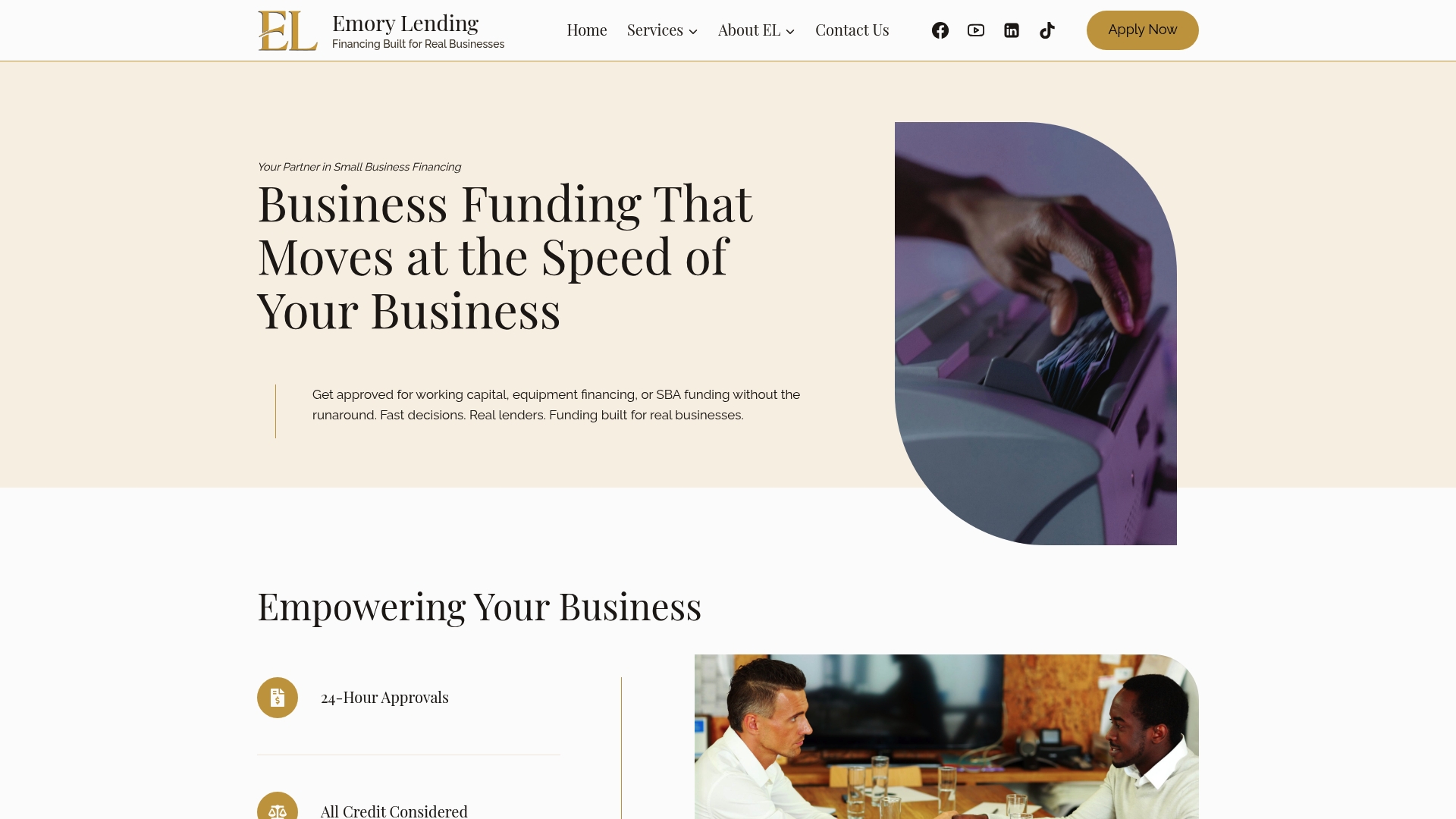
Funding spans $5,000 to $5,000,000, so owners can cover a single piece of equipment or a major expansion. According to the company, some solutions can approve in 24 hours for qualified applicants. Emory Lending evaluates cash flow and revenue as primary underwriting inputs rather than relying only on personal credit.
Core Features
The application evaluates revenue, cash flow, and growth signals and uses those metrics to match businesses with lending partners. Loan options include term loans, equipment financing, SBA loans, and lines of credit for expansion, payroll, and receivables. The intake process accepts all credit profiles so businesses with mixed personal scores can still compete when their operations show strength.
Key Differentiator
Emory Lending bases matches on business performance metrics like cash flow and revenue instead of primarily using personal credit scores. That focus lets lenders weigh growth potential and operational stability when making offers. For owners with strong top-line performance but weaker personal histories, this underwriting approach creates access that standard credit screens often block.
Pros
Owners can apply once and see multiple product types, which simplifies the search for equipment funding, working capital, or SBA-backed loans. The platform’s emphasis on cash flow means healthy operations get considered even if personal credit looks mixed. You are not obligated to accept any matched offer, so you can compare terms from different lenders before committing.
Cons
- Primarily serves businesses in the Southeast, so coverage and available lender options may be limited outside that region.
Who It’s For
Small business owners in the Southeast with an established revenue history will benefit most. If you need working capital, equipment financing, or payroll coverage while relying on business performance rather than personal credit, this fits well. Very new startups with little revenue may find eligibility requirements restrictive.
Unique Value Proposition
Emory Lending matches borrowers to lenders using business revenue and cash flow as the primary underwriting inputs. That approach shifts the conversation from personal credit to operational performance, which can unlock offers from lenders that focus on company metrics. For a growing business, this can result in loan options tailored to planned uses like equipment upgrades or location expansion.
Real World Use Case
The company describes a manufacturing SME in Georgia that secured a $500,000 equipment loan using business revenue and cash flow instead of personal credit. The loan funded machinery purchases and increased production capacity, the company says. That example shows how performance-based underwriting can move capital toward operational needs faster than traditional personal credit reviews.
Pricing
Pricing depends on the lender and the specific financing product. Costs include interest rates, origination fees, and APRs that vary by loan type and borrower profile. Emory Lending does not publish fixed rates because final terms come from matched lending partners.
Website: https://emorylending.com
FundingPilot
At a Glance
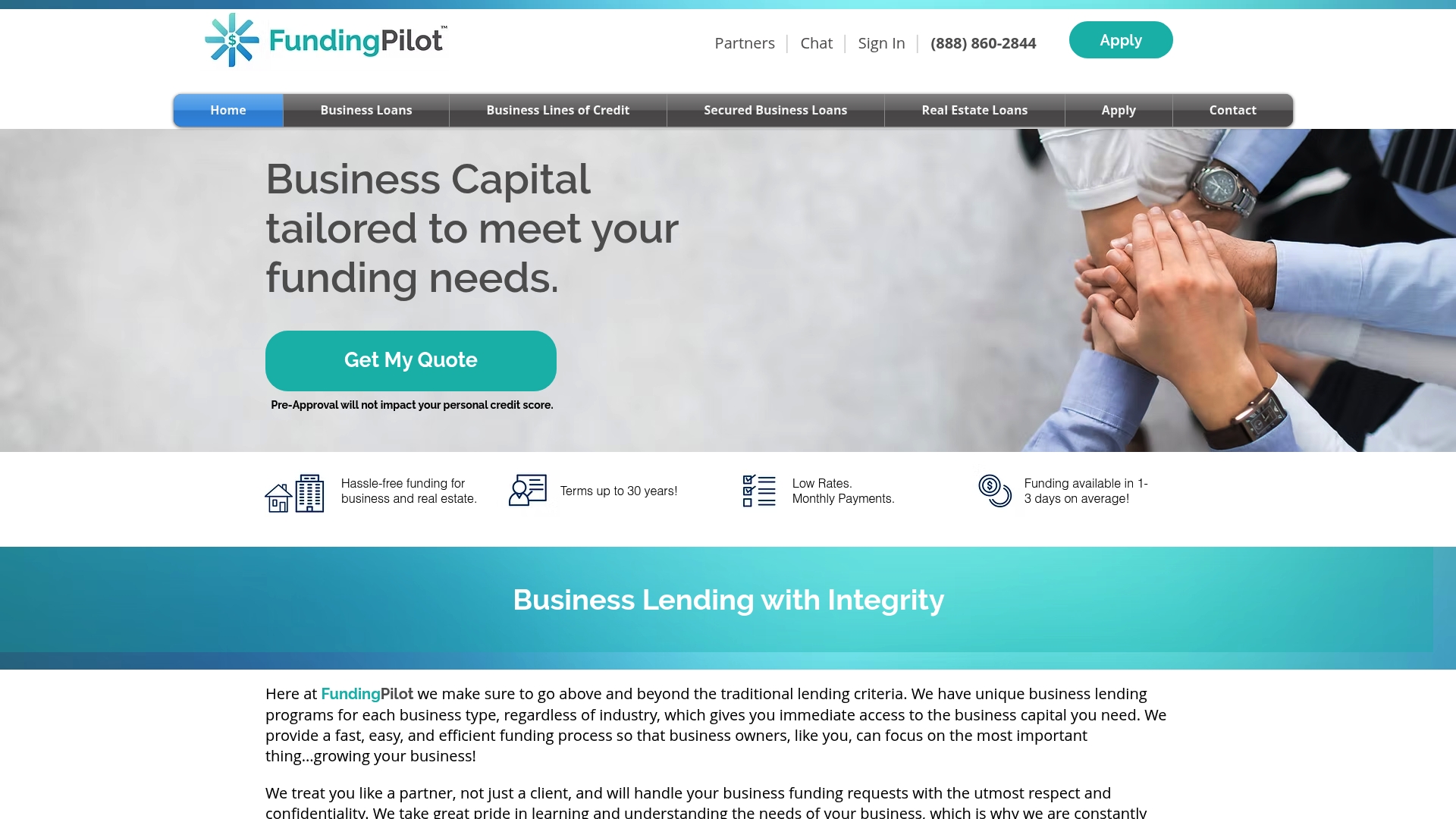
Pre-approval with FundingPilot does not impact your personal credit. The vendor advertises funding in as quick as 1–3 days for some loan types. FundingPilot lists business loans, lines of credit, and real estate loans with terms that can stretch to 30 years for property financing.
Core Features
FundingPilot bundles tailored business and real estate funding options into a single application workflow, so you can compare unsecured, secured, and investor-focused programs without repeating basic paperwork. The platform highlights specialized products such as fix and flip loans and real estate investor lines. It also emphasizes flexible qualification criteria and flexible loan terms up to 10 years for business loans.
Key Differentiator
FundingPilot centers on rapid pre-approval and program matching regardless of industry or credit profile. That focus means the application process aims to surface funding options quickly, and the company positions itself as a partner to small business owners and real estate investors rather than a one-size-fits-all lender.
Pros
FundingPilot makes speed a clear strength. The vendor claims quick funding for certain loans, which suits borrowers who need capital fast. The product catalog covers both business and real estate needs, so you can pursue working capital, equipment financing, or an investor loan from a single point of contact. The platform also advertises pre-approval without a personal credit hit, which helps preserve borrower credit profiles while shopping options.
Cons
-
Limited public rate and fee information requires direct contact to get exact pricing.
-
Some site links appear unavailable or lead to inaccessible pages, which can interrupt the application flow.
-
Underwriting criteria are not fully disclosed, making qualification hard to predict before speaking with an agent.
When It May Not Fit
If you need clear, published rate tables before you apply, this service may not fit your needs. Borrowers who require full, transparent underwriting rules up front will face uncertainty. Also avoid it if your process depends on self-serve online rate calculators or fully documented fee schedules.
Who It’s For
Small business owners, real estate investors, and entrepreneurs who need fast, flexible funding options will find FundingPilot relevant. It suits people comfortable discussing terms with a funding specialist and those with mixed credit profiles who want multiple program options. It is less suited to borrowers who demand entirely public pricing before engaging.
Real World Use Case
A real estate investor uses FundingPilot to obtain a fix and flip loan with minimal income verification and flexible terms. The investor gets program options that match property timelines and repair budgets. A small business owner seeking working capital can compare a short-term line of credit and a multi year business loan without separate applications.
Pricing
Pricing is variable and depends on loan product and applicant profile. Exact rates and fees are not publicly disclosed, so you must request a quote to see pricing for your specific situation. Loan term lengths and security requirements influence price and structure.
Website: https://fundingpilot.com
Mimo Funding
At a Glance
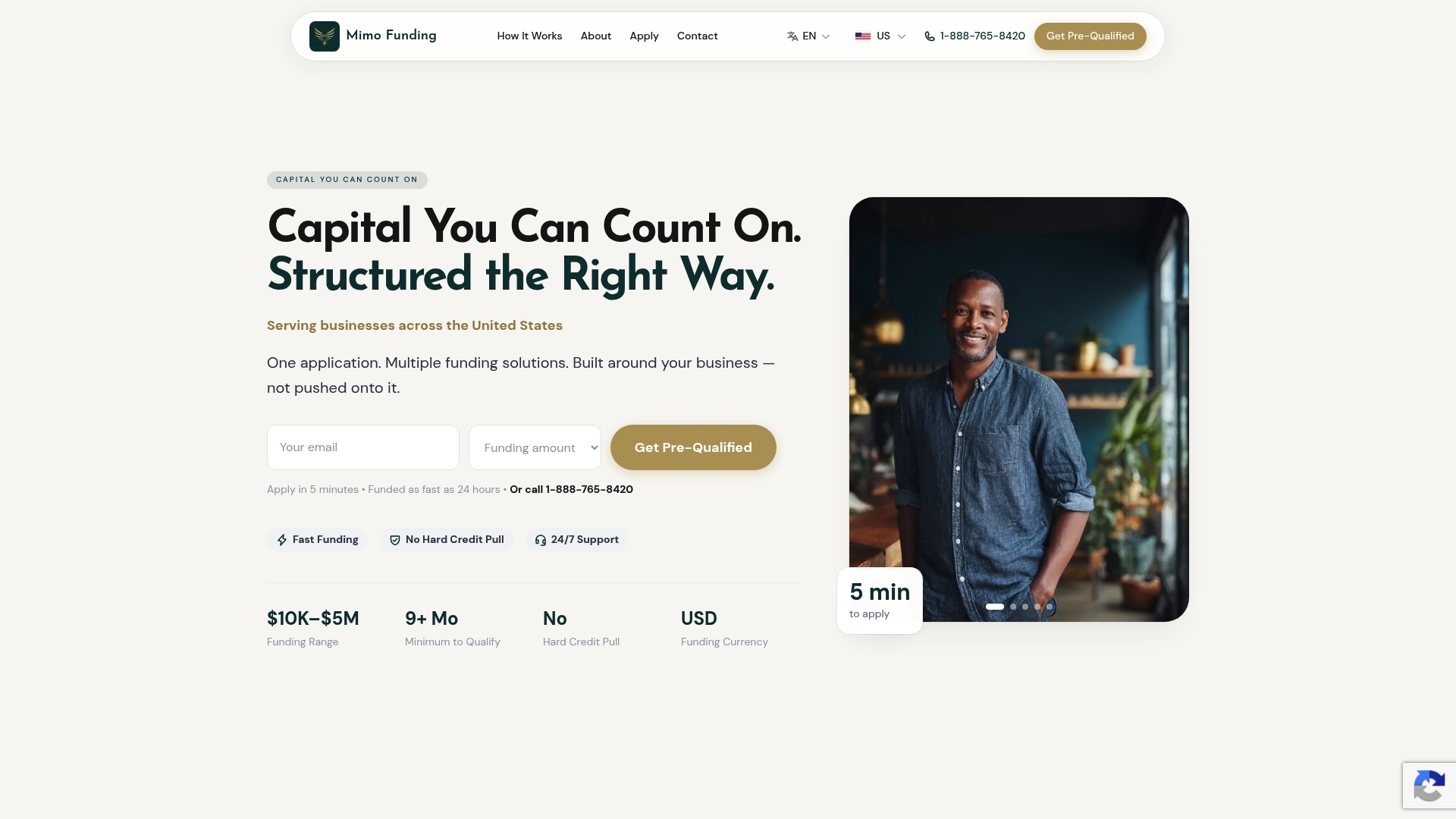
Mimo Funding reports serving over 500 businesses and claims more than $25 million funded so far. According to the company, funding can close in as little as 24 hours for some options. The service connects businesses to multiple lenders through one application and favors unsecured options for many customers.
Core Features
A single application routes requests to multiple lending solutions, so you compare working capital, term loans, lines of credit, and factoring without repeating paperwork. The platform emphasizes quick turnaround and says many paths avoid a hard credit pull. Flexible repayment terms and support for US and Canadian businesses appear across its offerings.
Key Differentiator
Mimo Funding’s main angle is the one-application model that lets its team review and structure several funding options at once. That approach reduces back-and-forth with separate lenders and can speed approvals when lenders cooperate. The vendor also highlights unsecured paths for businesses that lack collateral.
Pros
Fast approval and funding times are a clear advantage for businesses that need cash quickly, especially seasonal retailers. Transparent terms and a stated focus on avoiding hidden fees make fee comparisons easier. The mix of working capital, loans, lines of credit, and factoring gives you multiple ways to access capital without sourcing each lender individually.
Cons
- Funding availability may be limited in some provinces or states, which restricts options for certain businesses.
- Approval depends on individual lender review, so submitting an application does not guarantee funding.
- Exact terms and costs vary by lender, which can make side-by-side comparisons complex for owners.
When It May Not Fit
If you operate in a state or province where Mimo Funding does not place products, the platform will offer limited value. Businesses that need guaranteed financing will find this model risky because lenders perform final underwriting. If you require a single fixed rate from one provider, the brokered, lender-dependent structure may feel fragmented.
Who It’s For
Small and medium business owners in the US or Canada who need quick, flexible capital and can tolerate lender-driven terms will get the most value. Owners managing seasonal inventory, payroll gaps, or short-term expansion needs match this profile. Businesses without substantial collateral will appreciate unsecured funding options.
Real World Use Case
A retail store needs working capital to stock for the holiday season and cover payroll during a slow month. The owner completes one application and receives multiple lender offers to compare. A quick unsecured advance closes the cash gap while a longer term loan funds larger inventory purchases.
Pricing
Not applicable. The service is described as informational only and does not list fixed pricing tiers. Loan costs and pricing vary by the lender that ultimately funds your deal.
Website: https://mimofunding.com
OnDeck
At a Glance
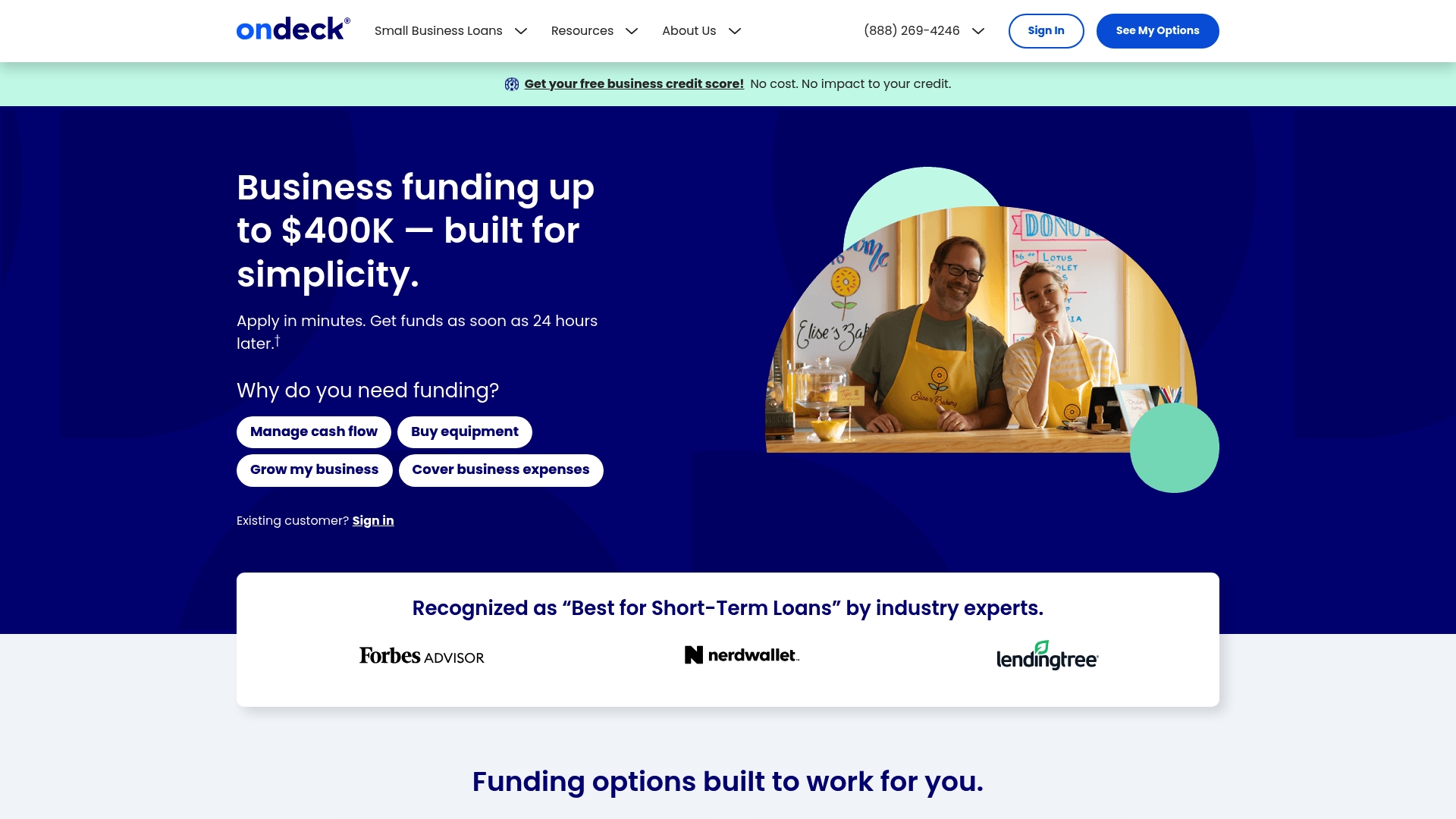
According to the company, same-day funding is available on weekdays for applications completed before 10:30 a.m. ET. The vendor advertises an average APR around 56%, reflecting short-term loan pricing. OnDeck serves small businesses in the US and Canada, with specific state and industry restrictions.
Core Features
OnDeck combines a quick online application with eligibility checks that avoid hard credit inquiries, so you can see options without a hard pull. The platform offers term loans and revolving credit lines with flexible repayment choices of 12, 18, or 24 months and loan amounts up to $400,000. Same-day funding and online account management keep approvals and draws fast for routine cash flow needs.
Key Differentiator
That funding speed pairs with strong industry visibility and a high Better Business Bureau presence. Positive coverage from outlets such as Forbes and Nerdwallet adds external credibility. For owners who value fast access and a clear online process, that combination sets OnDeck apart among short-term lenders.
Pros
Fast access to capital makes OnDeck useful when cash flow timing matters, with funds often available within 24 hours of approval. The online eligibility check avoids hard credit pulls, letting you shop options without impacting your score. Multiple loan structures, including a revolving line of credit, let you use funds for payroll, inventory, or equipment. Industry recognition and a solid BBB standing improve confidence during underwriting and servicing.
Cons
- High APR: The advertised average APR around 56% makes long-term borrowing costly and suits short-term needs.
- Geographic and industry limits: Lending is restricted in North Dakota and some business types.
- Qualification requirements: Applicants need at least one year in business, $100,000 in annual revenue, and a personal FICO score of about 625.
When It May Not Fit
If you need low-cost, long-term financing, OnDeck is not a good match because of that high average APR. Businesses operating in restricted industries or based in North Dakota cannot apply. New startups without a year of operations or lower revenue will not meet the minimum eligibility thresholds.
Who It’s For
Small business owners with established revenue who need timely working capital will find OnDeck useful. Ideal applicants have at least one year in business, $100,000 or more in annual revenue, and a personal FICO score near 625 or higher. The product suits owners who prioritize speed over the cheapest possible rate.
Real World Use Case
A retail owner secures a revolving line of credit to buy seasonal inventory and cover payroll during peak months. Quick approvals and same-day draws let the owner place orders and staff appropriately. The line reduces stockouts and preserves vendor relationships during surges.
Pricing
Rates vary by creditworthiness and loan type. That average APR figure of about 56% applies to many short-term products on the platform, though individual offers differ. Expect variable interest and fees tied to loan size, term, and your business profile.
Website: https://ondeck.com
Comparison of alternatives
For professionals exploring financial solutions to secure capital, contrasting the distinct offerings of available services provides clarity in selection. Four platforms—Emory Lending, FundingPilot, Mimo Funding, and OnDeck—each provide distinguished value propositions that cater to different aspects of funding preferences. Below, we assess their comparative strengths in features and potential use cases.
Evaluation criteria methodology
Emory Lending excels in its distinct focus on evaluating a business’s operational performance, such as cash flow and revenue data, allowing viable small enterprises to qualify without placing undue emphasis on personal credit history. In contrast, FundingPilot offers a streamlined pre-approval process that avoids affecting personal credit scores. Mimo Funding provides expedited unsecured funding options with versatile terms. Overall, enterprises with solid operational metrics may find Emory Lending’s customized approach advantageous compared to the generalized offerings of FundingPilot or the primarily short-term focus of OnDeck.
Funding process expedition and transparency
Regarding access to funds, FundingPilot leads the group by delivering pre-approval outcomes within as few as one to three days. OnDeck aligns with its rapid delivery, advertising same-day funding for applications submitted before 10:30 a.m. ET. Emory Lending and Mimo Funding offer similarly efficient timelines, though timelines can vary based on lender-partner workload and applicant assessments. However, it must be noted that Mimo Funding’s one-application approach for submitting multiple lender requests highlights a time-saving merit, particularly in scenarios requiring diverse funding solutions.
Best fit
- Small business owners in the southeastern United States with a steady revenue history and significant need for working capital or equipment financing could benefit considerably from Emory Lending’s emphasis on operational performance metrics over personal credit evaluations.
- Businesses operating under time constraints and requiring funding within one to three business days should explore FundingPilot due to its efficient pre-approval and funding timeline.
- Real estate investors or buyers seeking specialized funding solutions, such as fix-and-flip loans or rental property finance, may lean towards FundingPilot for its specific product offerings tailored to real property financing needs.
- Entrepreneurs open to exploring multiple funding options per application and valuing flexibility in repayment terms will find Mimo Funding’s inclusive philosophy and unsecured paths beneficial.
- Long-established small businesses looking to manage periodic capital needs might prioritize OnDeck for its revolving credit lines and longevity in rapid service delivery.
Our pick
Among these solutions, Emory Lending represents our top choice for small business owners primarily seeking financing solutions oriented around business operational health rather than personal credit evaluations. Their underwriting approach caters strongly to entrepreneurial ventures that have established revenue streams and long-term growth aspirations. However, businesses requiring the fastest funding availability or looking for specialized property financing may consider evaluating other platforms to meet those specific needs directly.
For businesses seeking funding options that factor business performance and cash flow into the equation, several platforms offer unique features worth considering.
| Product | Key differentiator | Best for | Pricing | Notable limitation |
|---|---|---|---|---|
| Emorylending | Focus on cash flow and revenue metrics | Small businesses with substantial revenue | Price not published | Regional limitation to the Southeast |
| FundingPilot | Speedy pre-approval process | Small businesses and real estate investors | Price not published | Limited public rate and fee information |
| Mimo Funding | One-application model for multiple lenders | Seasonal retailers and cash-strapped SMEs | Price not published | Approval dependent on individual lenders |
| OnDeck | Same-day funding availability | Established businesses needing fast capital | Variable APR ~56% | High APRs and geographic restrictions |
Facing Limits With Fundwell.com Alternatives? Emorylending Focuses on Your Business, Not Just Credit
Many small business owners struggle to qualify for funding due to concerns about personal credit scores. If you need working capital, equipment financing, or help to cover payroll, Emorylending evaluates your business revenue and cash flow instead of relying only on personal credit. This means businesses with strong operations can secure capital ranging from $5,000 to over $5,000,000, even if personal credit looks mixed.
Find tailored loan options based on your business performance, not just credit history. Visit Emorylending to learn how you can apply once and receive multiple product matches designed to help your business grow and expand.
FAQ
How fast can Emorylending provide funding for small business loans?
Emorylending can approve some solutions in as little as 24 hours for qualified applicants. Their focus on cash flow and revenue as primary inputs speeds up the underwriting process, which is advantageous for small business owners in need of quick funding. Owners should prepare their revenue and cash flow documentation to maximize their chances of speedy approval.
What is the difference between Emorylending and FundingPilot?
FundingPilot emphasizes pre-approval without impacting personal credit and offers rapid funding in as quick as 1–3 days. Emorylending, meanwhile, bases its lending on business performance metrics like cash flow instead of personal credit scores. This focus allows owners with strong operational history to secure funding even with mixed credit scores.
Which alternative offers a wider range of loan types, Emorylending or Mimo Funding?
Mimo Funding routes requests to multiple lending solutions through a single application, making it easier to compare working capital, term loans, lines of credit, and factoring. Emorylending also offers various loan options, but its focus on matching based on cash flow may limit some small business owners looking for specialized products. Small business owners should consider their specific needs to choose the best fit for their situation.
Can I access Emorylending’s services with a mixed personal credit score?
Yes, Emorylending accepts all credit profiles, including mixed personal scores. The underwriting process focuses more on business performance metrics, which allows small business owners to compete for funding opportunities despite personal credit challenges. Owners in this situation can apply confidently and explore their financing options.
How does Emorylending’s approach impact access to funding for new startups?
While Emorylending caters to small businesses with established revenue history, very new startups may find eligibility requirements restrictive. Emorylending prioritizes business performance metrics, which typically requires a track record that new businesses may not yet have. New startups should prepare their financial projections to enhance their funding prospects.


