

Business expansion financing is the process of securing capital to grow your operations, whether that means opening a new location, buying equipment, hiring staff, or entering new markets. Knowing how to finance business expansion starts with matching the right funding tool to your specific growth goal. Options range from SBA 7(a) loans and term loans to business lines of credit, equity investment, and alternative lenders. This guide breaks down each option, explains what lenders require, and gives you a clear path from preparation to approval.
What are the best financing options for business expansion?
Business expansion financing, also called growth capital, covers several distinct products. Each one serves a different purpose, and choosing the wrong one can cost you more than you expect.
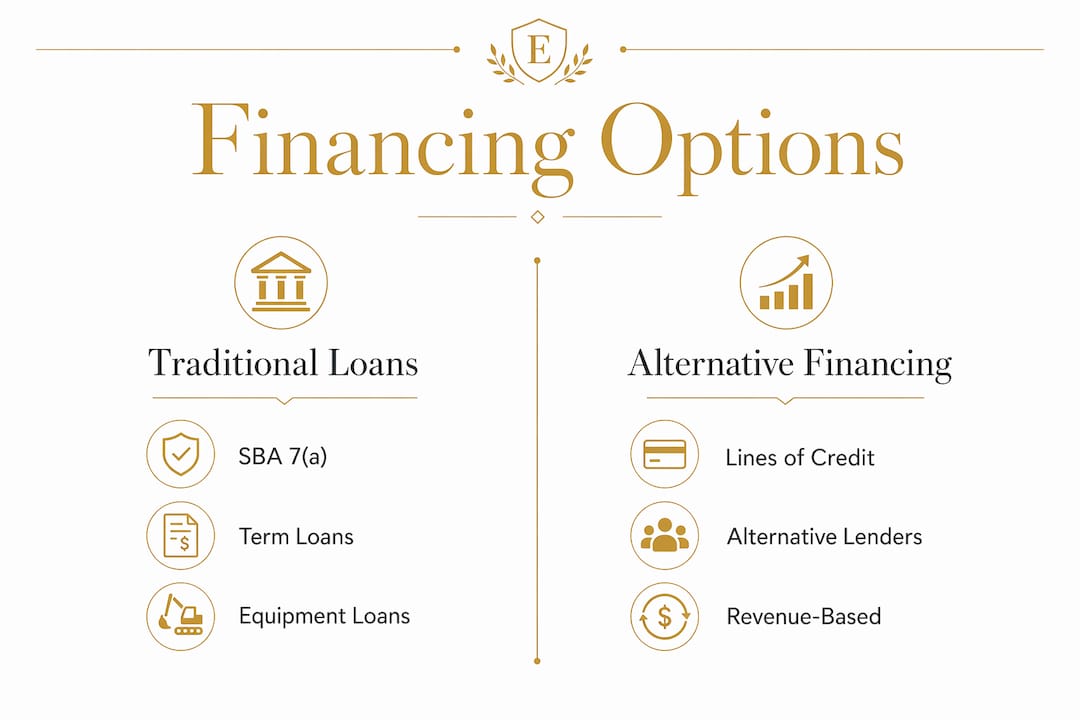
Term loans provide a fixed lump sum upfront with scheduled repayments over a set period. Term loans suit lump-sum needs like buying a building, funding a product launch, or consolidating debt. Interest rates can be fixed or variable depending on the lender.

SBA 7(a) loans are the most widely used government-backed option. The SBA 7(a) program provides funding up to $5 million with repayment terms from 10 to 25 years. These loans cover real estate, equipment, working capital, and refinancing, making them one of the most flexible tools available. SBA 504 loans take a narrower focus. 504 loans target fixed assets like commercial real estate and heavy machinery, with long terms and lower down payments than conventional loans.
Business lines of credit work differently. Lines of credit offer revolving access to funds, and you pay interest only on what you draw. They work well for managing cash flow during growth phases but are not the right tool for major capital expenditures.
Alternative lenders fill the gap for businesses that do not qualify for traditional products. Revenue-based financing, invoice factoring, and merchant cash advances all fall into this category. The tradeoff is cost. Alternative products carry higher rates in exchange for faster approvals and looser requirements.
| Financing type | Best use | Key advantage | Main drawback |
|---|---|---|---|
| SBA 7(a) loan | General expansion, working capital | Up to $5M, long repayment terms | Slow approval, paperwork-heavy |
| SBA 504 loan | Real estate, heavy equipment | Low down payment, fixed rates | Fixed assets only |
| Term loan | Lump-sum capital needs | Predictable payments | Requires strong credit |
| Business line of credit | Short-term cash flow gaps | Pay interest only on draws | Not for large capital buys |
| Equipment financing | Machinery, vehicles, tech | Equipment serves as collateral | Limited to equipment purchases |
| Alternative lenders | Fast capital, weaker credit | Quick funding, flexible criteria | Higher cost |
Pro Tip: Equipment financing deserves special attention. Equipment loans can cover up to 100% of the purchase price, with the equipment itself serving as collateral. That means you protect other business assets while still acquiring what you need to grow.
How to prepare your business before applying for expansion funding
Preparation separates approvals from rejections. Lenders assess creditworthiness, business track record, and purpose of funds, so walking in without documentation is the fastest way to get turned down.
Most lenders require your business to be at least two years old with consistent revenue. Before you apply, pull together the following documents:
- Federal tax returns for the past two to three years
- Profit and loss statements covering at least the last 12 months
- Balance sheets showing current assets, liabilities, and equity
- Accounts receivable and inventory records to demonstrate cash flow health
- A written business expansion plan with financial projections for the next 12 to 36 months
Your personal and business credit scores matter more than most owners realize. Pay down existing balances, resolve any delinquencies, and check your credit reports for errors before submitting any application. A score improvement of even 20 to 30 points can shift you from a higher-rate product to a better one.
Strong financial statements and a clear expansion plan directly improve your approval odds. Lenders want to see that you know exactly what the money is for and that your business generates enough cash flow to repay it.
The SBA’s Lender Match tool connects you with participating lenders who offer competitive rates and guidance tailored to your situation. It is free to use and takes less than five minutes to complete. You can also benchmark your financials against sector peers using resources like Lacuna Index to see where your numbers stand before a lender does.
Pro Tip: Hire a CPA or financial advisor to review your documents before submission. A clean, well-organized package signals professionalism and reduces back-and-forth with underwriters.
How to apply for a business expansion loan step by step
The application process has a clear sequence. Skipping steps creates delays and, in some cases, automatic disqualifications.
-
Define your expansion goal. Decide exactly what you need the money for. Buying equipment, opening a second location, and hiring a sales team each require different loan products and amounts. Vague applications get rejected.
-
Calculate the funding amount. Build a detailed cost estimate for your expansion project. Include a buffer of 10–15% for unexpected costs. Lenders want to see that you have thought through the numbers.
-
Research lenders and loan products. Compare traditional banks, credit unions, SBA-approved lenders, and alternative online lenders. Use the SBA’s Lender Match tool to identify SBA-approved options. Review smart ways to use business loans to understand how other businesses have structured similar deals.
-
Prepare your application package. Compile all financial documents, your business plan, and your expansion projections. Write a clear executive summary explaining the purpose of the loan and how you will repay it.
-
Submit and follow up. Submit your application and respond to lender requests within 24 to 48 hours. Slow responses signal disorganization and can push your file to the bottom of the queue.
-
Review the offer carefully. Read the full loan agreement before signing. Pay attention to the annual percentage rate, prepayment penalties, collateral requirements, and personal guarantee clauses.
-
Close and draw funds. Once approved, complete the closing process and draw funds according to your expansion plan. Keep records of how every dollar is spent.
Approval timelines vary significantly. SBA loans can take 30 to 90 days. Alternative lenders can fund in as little as 24 to 72 hours. Plan your expansion timeline around the funding source you choose.
What are the best practices for managing expansion financing?
Getting the money is only half the job. How you manage it determines whether the expansion succeeds or creates a debt problem.
Blending multiple funding sources reduces risk and increases flexibility. A term loan can cover the large capital outlay while a line of credit handles day-to-day cash flow needs. Retained earnings can cover smaller costs to reduce total borrowing. This layered approach keeps your debt service manageable even if revenue grows slower than projected.
Key practices to follow once funding is in place:
- Match loan terms to asset life. Finance a piece of equipment with a loan that matures before the equipment needs replacement. Do not use a short-term credit line to buy long-lived assets.
- Monitor cash flow weekly. Growth phases create cash flow gaps even when revenue is rising. Track receivables, payables, and loan payments on a weekly basis.
- Avoid overborrowing. Borrow what you need, not what you qualify for. Excess debt raises your fixed costs and reduces your ability to respond to market changes.
- Do not misuse short-term credit. A business line of credit is for operational gaps, not capital investment. Using it for equipment or real estate creates a repayment mismatch.
- Build your lender relationship. Communicate proactively with your lender, especially if revenue dips. Lenders work with borrowers who keep them informed. They cut off borrowers who go silent.
Pro Tip: Negotiate before you sign. Ask for lower origination fees, a longer draw period on a line of credit, or a rate reduction tied to automatic payments. Lenders have more flexibility than they advertise, and asking costs nothing.
Explore business growth capital strategies to see how other small businesses have structured their funding mix for sustainable growth without overextending.
Key takeaways
Financing business expansion works best when you match the right funding product to a specific, well-documented growth goal.
| Point | Details |
|---|---|
| Match funding to purpose | SBA 7(a) covers general needs; 504 targets fixed assets; lines of credit handle cash flow gaps. |
| Prepare before you apply | Gather tax returns, P&L statements, and a written expansion plan before contacting any lender. |
| Use the SBA Lender Match tool | This free tool connects you with approved lenders and competitive rates in minutes. |
| Blend funding sources | Combining term loans, lines of credit, and retained earnings reduces risk and lowers total cost. |
| Manage debt actively | Monitor cash flow weekly and avoid using short-term credit for long-term capital needs. |
What I have learned about funding business growth
Most business owners I talk to make the same mistake. They wait until they need money urgently before they start the process. By that point, they have no leverage. They take the first offer they get, often at a rate they would never have accepted with more time.
The owners who fund expansion well treat financing as a planning exercise, not an emergency response. They know their numbers cold. They have a written plan. They have already built a relationship with at least one lender before they need a dollar.
The other thing I see consistently is a misunderstanding of what lenders actually care about. Personal credit matters, but cash flow is the real story. A business generating strong, consistent revenue with clean books will get funded. A business with a great personal credit score but messy financials will struggle. Focus your energy on the financial health of the business itself.
One more thing worth saying plainly: not every expansion needs outside debt. Sometimes the right move is to grow more slowly using retained earnings and a modest line of credit rather than taking on a large term loan. Debt accelerates growth, but it also amplifies risk. The best expansion financing strategy is the one that keeps your business solvent if the growth takes six months longer than planned.
— Jason
Emorylending can help you fund your next expansion
Emorylending evaluates your business performance and cash flow, not just your personal credit score. That means more small businesses qualify for the capital they need to grow.
Whether you need a term loan for a new location, equipment financing for a major purchase, or working capital to cover payroll during a growth phase, Emorylending works with businesses securing funding from $5,000 to $5,000,000+. Review the full business financing options list to find the product that fits your expansion plan, or contact Emorylending directly to get a personalized funding recommendation based on your actual business performance.
FAQ
What is a business expansion loan?
A business expansion loan is any financing product used to fund growth activities such as opening new locations, buying equipment, or increasing inventory. Common types include SBA 7(a) loans, term loans, and equipment financing.
How long does a business need to operate before qualifying?
Most lenders require at least two years of operating history with solid financial performance before approving expansion financing. Some alternative lenders have shorter requirements but charge higher rates.
What is the difference between an SBA 7(a) and an SBA 504 loan?
SBA 7(a) loans cover general purposes including working capital, equipment, and real estate, up to $5 million. SBA 504 loans are limited to major fixed assets like commercial real estate and heavy machinery, with lower down payments and long repayment terms.
Can I use a business line of credit to fund expansion?
A business line of credit works well for short-term cash flow needs during a growth phase but is not suited for large capital expenditures. Use it alongside a term loan rather than as a replacement for one.
What documents do lenders typically require for expansion financing?
Lenders typically ask for two to three years of tax returns, recent profit and loss statements, balance sheets, accounts receivable records, and a written business expansion plan with financial projections.


